AI & Glass: Unveiling Societal Stereotypes

If a glassblowing time traveller from the medieval era were to materialise in the Suomenlinna Glass Studio, they would likely navigate the workshop effortlessly. Hand tools and even the blowing bench have endured relatively unchanged. However, if the time traveller were a future AI cyborg, it would bring a whole new dynamic to the studio! In the world of artificial intelligence, there’s a noticeable gap in understanding traditional crafts. For instance, when it comes to glassblowing, the AI seems to mix up the tools with those used by electricians and blacksmiths. While these features are still evolving in visual AI applications, they intriguingly reflect aspects of our society – sometimes brutally honestly, especially when it comes to stereotypes.

tekoälytaide tekoäly ai glass art contemporary glass taide taiteilija veistos
AI does not yet comprehend glassblowing, or at least it holds a highly futuristic perception of it.
Sin appears in the eyes of artificial intelligence as a characteristic linked to women. My assumption is that software like MidJourney relies heavily on imagery from popular culture, further reinforcing connections to human traits and characteristics. This trend is increasingly shaping associations with various aspects of personalities and features

The questions arise: What do researchers from Finland, Sweden, or Norway look like? How about a New York street cleaner? The pursuit of these answers embarks on a journey I undertake in December with the support of the Kordelin Foundation. It’s a great opportunity to start an art project that blends glass and artificial intelligence. My intention is to capture stereotypes in the early stages of visual artificial intelligence programs. Technology is a mirror reflecting the complexity of humanity. Visual AI applications mirror societal assumptions about social classes and backgrounds. Image recognition, for instance, can paint a picture that people in certain environments or wearing specific types of clothing belong to a particular social class.

I filter this data through the ancient techniques of mouth-blown glass. It offers a unique opportunity to scrutinise stereotypes through the intangible medium and see into the intersection of technology and art. Can technology operate as the medium of art and what is its potential to challenge, transform, or reinforce our perspectives on the world? The synergy of ancient glassblowing and modern AI creates a space where contemporary stereotypes can be critically approached through art.
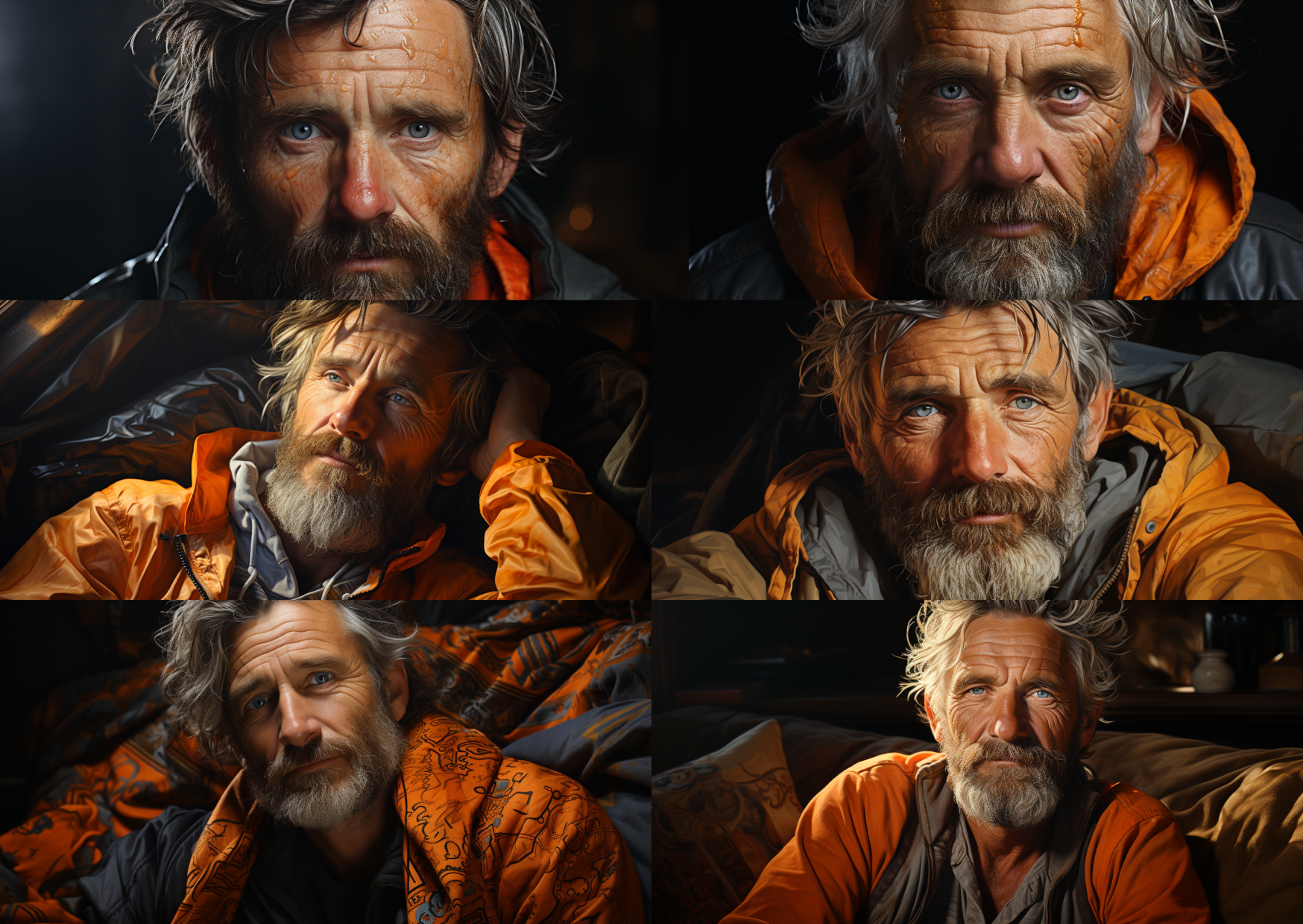
What does a liar look like? Well, as a bearded man in a hoodie? Lying, deceit and evil people are the characteristics connected to this orange hooded archetype. The recurring appearance may stem from both the training data used and the algorithm’s generalising nature in response to specific search commands
tekoäly ai artificial intelligence taide contemporary glass contemporary art taiteilija taideteos
In the eyes of artificial intelligence: a New York City street sweeper. I am interested in how nascent AI applications reflect societal stereotypes. Generalisaitons related to professions and gender are widely acknowledged issues, and it’s certain that they will evolve rapidly in the coming year. In the artistic process, I also pay attention to this change.
In depictions of mental illnesses, such as schizophrenia, generated by artificial intelligence, recurring patterns include faces that predominantly represent men – who look like they’ve been snipped straight out of Netflix . In image generations, for instance, the phrase ‘evil person’ primarily produces images of older men.

I’m interested in introducing more people to the fascinating world of glass and keeping it accessible. I’m part of a multinational project pushing to get glass recognised on UNESCO’s prestigious list. But let’s face it, having a fancy status isn’t enough; we need to take real action and spark fresh interest in glass art. The craft is fading fast worldwide. As the glass experts exit the scene, their endangered know-how is quietly slipping away. My ambition is to act as a catalyst, pushing the industry forward through inventive collaboration

As we stand at the crossroads of time, where the medieval craftsmen and the futuristic AI cyborg converge in the glass studio, it becomes apparent that the journey undertaken is not just through the lens of art and technology – it is a narrative that mirrors the complexities of our evolving world.

Thank you Kordelin foundation for the support! #kordelininsäätiö #kordelininsäätiöntuella

Exhibition in G12, Helsinki

lasitaide lasiveistos nykytaide
Snake-shaped chandeliers that weep tears, symbolize the complexities and struggles of domestic life. Snake is a symbol of rebirth and transformation, and a metaphor for the primal, animalistic urges that lie dormant within us. In many cultures, snakes are seen as both symbols of healing and destruction.

Homes are more than mere structures that we inhabit. For they serve as reflections of our innermost thoughts, emotions, and concealed identities. Sini Majuri’s latest sculpture series delves into the non-physical dimensions of our existence.

Sini Majuri’s glass exhibition is open in G12 Gallery in Helsinki from April 22 till May 11, 2023. Pieces blend the tangible and intangible, the old and new, and the handmade and digital. By blurring the lines between art and science, Majuri hopes to capture the ever-evolving nature of art and the human experience – and challenge viewers to consider is it possible that technology could unlock new depths of creativity – Or will it ultimately lead to a loss of authenticity and soul?

The glass sculptures portray layers of feminine countenances of the human psyche. By toying with ugliness and beauty, these works invite to think about the intricate nature of human perception and the multifaceted dimensions of aesthetics. Similarly, the image of a woman with layered faces represent the different roles that women play in society, as well as the complex nature of femininity itself.


Majuri’s work portrays homes as both a sanctuary of comfort and a site of trauma, using symbols like the weeping serpent and layered women to represent the nature of our subconscious. Glass, with its transparency and fragility is a metaphor for the human mind, which is complex and multifaceted. We may curate our homes to reflect a certain image or ideal, but behind closed doors, there may be hidden struggles and complexities that we keep hidden away from view. Antimatter series is showcasing both the light and the dark aspects of domestic life. While Finland ranks as the happiest country in the world, domestic violence remains a significant problem. The transparency of glass reminds us that what we see on the surface may not always be the full story.

lasinpuhallus lasitaide nykytaide veistos
Antimatter series mirror the theme of Homes, how they are the vessels of our being, the repositories of our memories, for they are more than mere structures that we inhabit. Sculptures also offer a reminder that healing and growth are possible, even in the face of trauma and adversity

Glass as a medium highlights the idea of transparency and the power of seeing through barriers. In the same way that glass reveals what lies beneath its surface – sculptures invite viewers to explore the hidden layers of our own consciousness and the stories that we often keep concealed. Transparency underscores the importance of vulnerability and honesty in our relationships, both with ourselves and with others. Glass is a material that is both fragile and strong, transparent and reflective. These qualities are a metaphor for the contradictions and paradoxes that we encounter in our lives.

Sini Majuri’s Artist Meet 4.5 at 12.00 in G12 Gallery, Annankatu 16.

Listen Sini Majuri’s interview in Radio Helsinki from here.

Images by Juha-Matti Vahdersalo