


Explore the unique works of Sini Majuri by clicking the images above, which will direct you straight to the online stores and galleries.
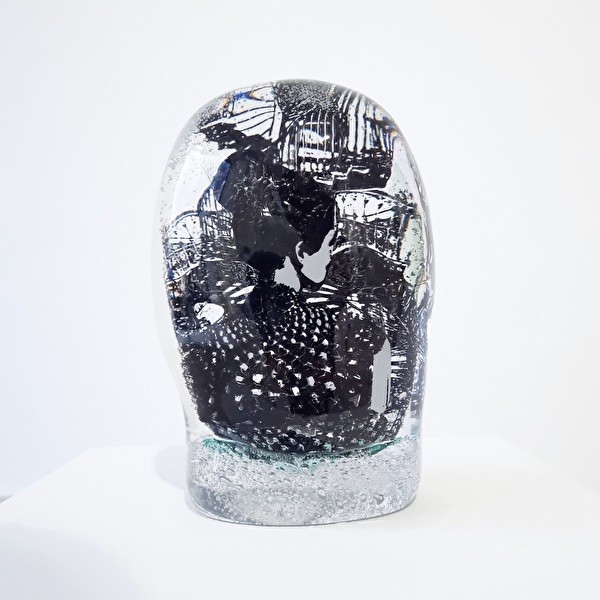
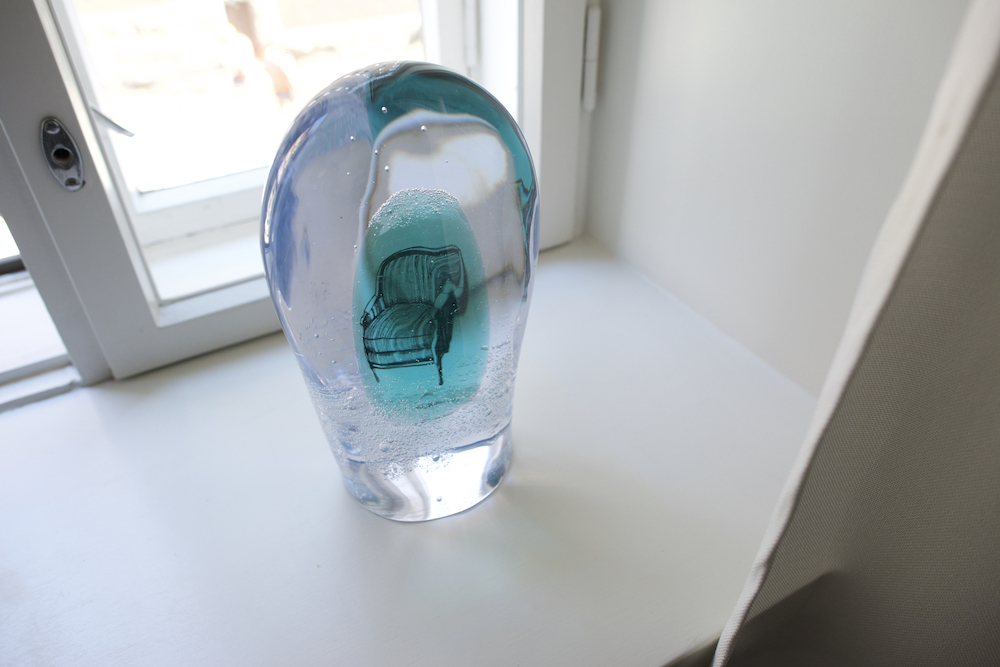
Cell sculpture is inspired in the way we are experiencing time, cells and soap bubbles. Some moments can define the whole person. Time is an invisible companion. We dive through it on our memory. Majuri’s starting point in the Cell series has been a interview study on her home region. She collected stories from the local people via the local newspapers and social media about the way pandemic affected to the visiting traditions. A young woman’s story of a pandemic: how she feared soap bubbles carrying the virus at her sister’s wedding. Something innocent had become dangerous. The turquoise floating oval reflects a flying soap bubble as well as the cell nucleus. Small white bubbles are created around it by sprinkling baking soda on a hot glass. Soda gasifies and tends to form a bubble while remaining inside the glass mass. Chairs are a common theme in Majuri’s sculptures. Seatings play an important role in homes. Seating communicates prestige and the internal structures of the family. The sculpture made of solid glass is an optical illusion in which the surface shapes of the glass cause the armchair to stretch and occasionally disappear from the view. The sculpture has been exhibited at Palazzo Loredan, Venice 2021 and Design Art Tokyo 2021.
Antimatter
Find the Antimatter sculpture from Keskusgalleria gallery.
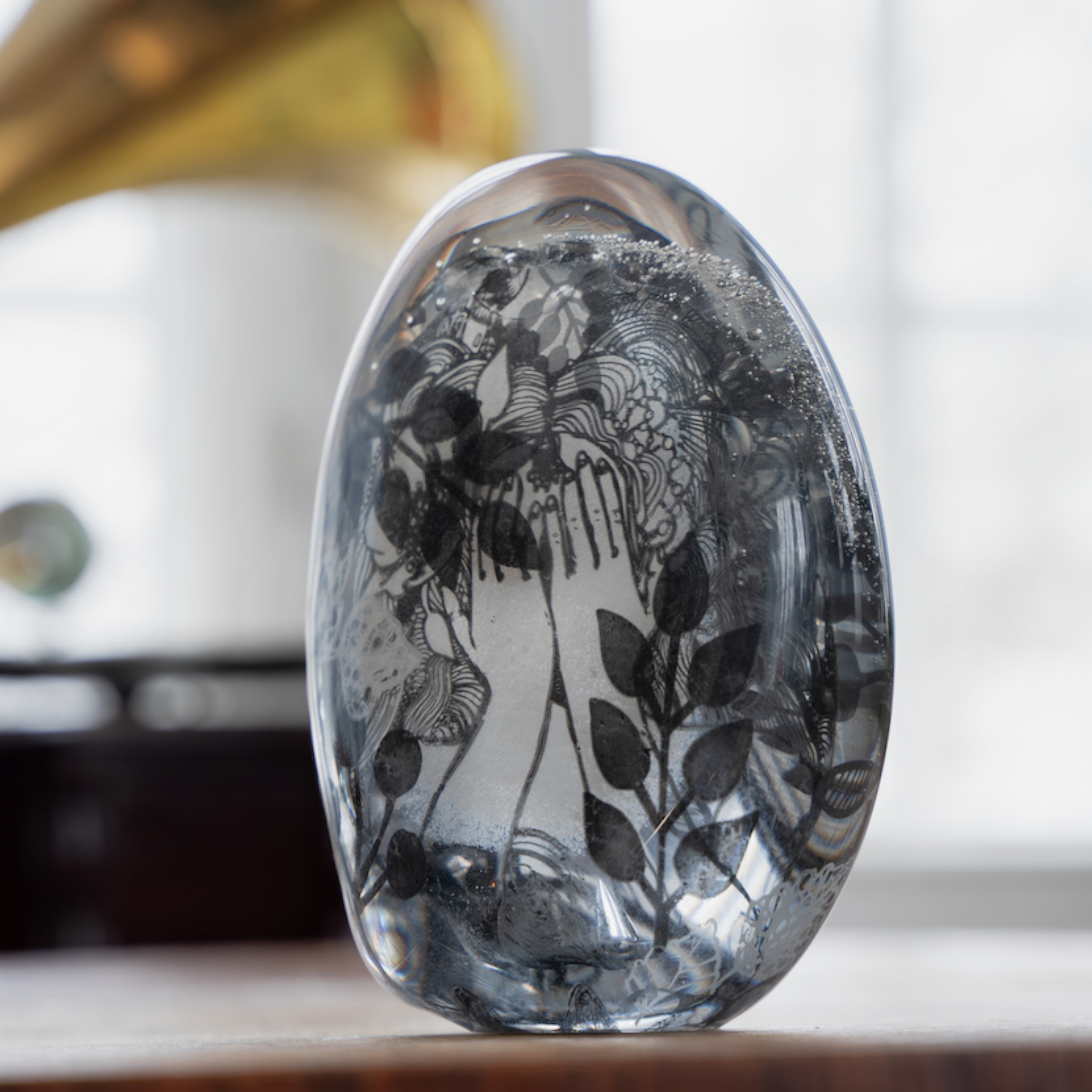
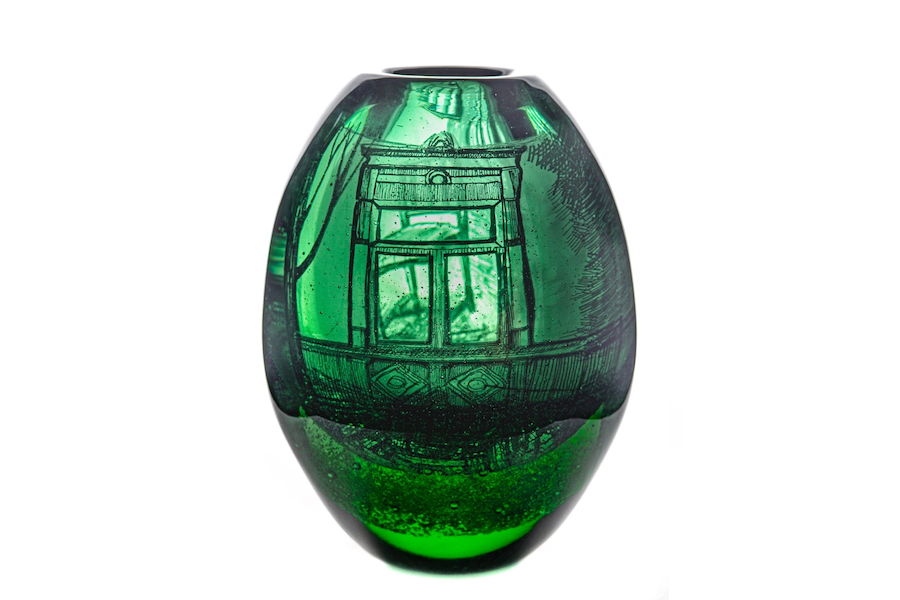
Antimatter series is made with Majuri’s innovative 3d graal-technique. The series of glass sculptures mirror the themes of human identity.
Home is something that defines us: who we are and whom we desire to be. Home can mean a chaos or a Serene safe haven. In the Antimatter piece I have played with a feeling that it is not clear are you looking in or looking out of a window. I see home as a metaphor of a persons psyche. It mirrors the existence and its visible as well as invisible layers. We must respect that we do not fully understand the world or each other.
Many of my sculptures are inspired by the old Finnish folklores. In some families, Grandma knew to make coffee before the guests arrived because she had “Etiäinen”. The footsteps walked inside and sat in the living room for coffee. The quest soon walked in. Etiäinen is an impression of a person, that walks before us, doing everything we are about to do – before us. It’s in a way a living shadow of a person. The antimatter sculpture reflects the essence of a moment, that has this feeling of sensing someone that is about to visit. The details of the room seem to be disconnected from reality. The white leaves of the wallpaper float on top of fishbone parquettes. The shape of the sculpture is vessel – because pots and vases are ancient means of storytelling and connected deeply in humanity.
The sculpture is created from green glass, shaped by hand and the images are first hand drawn, then transformed into silkscreen technique on the glass. The green color of the sculpture is also unique mixture. Antimatter is signed on the bottom by hand.
The antimatter seried has been on display at Bel Air Fine Art, Venice, Palazzo Loredan, The Venice Glass Week HUB 2021, and Design Art Tokyo 2021, Glass Axis Ohio, Toronto Design Week and Taos New Mexico 2012
Käärmeen pesä
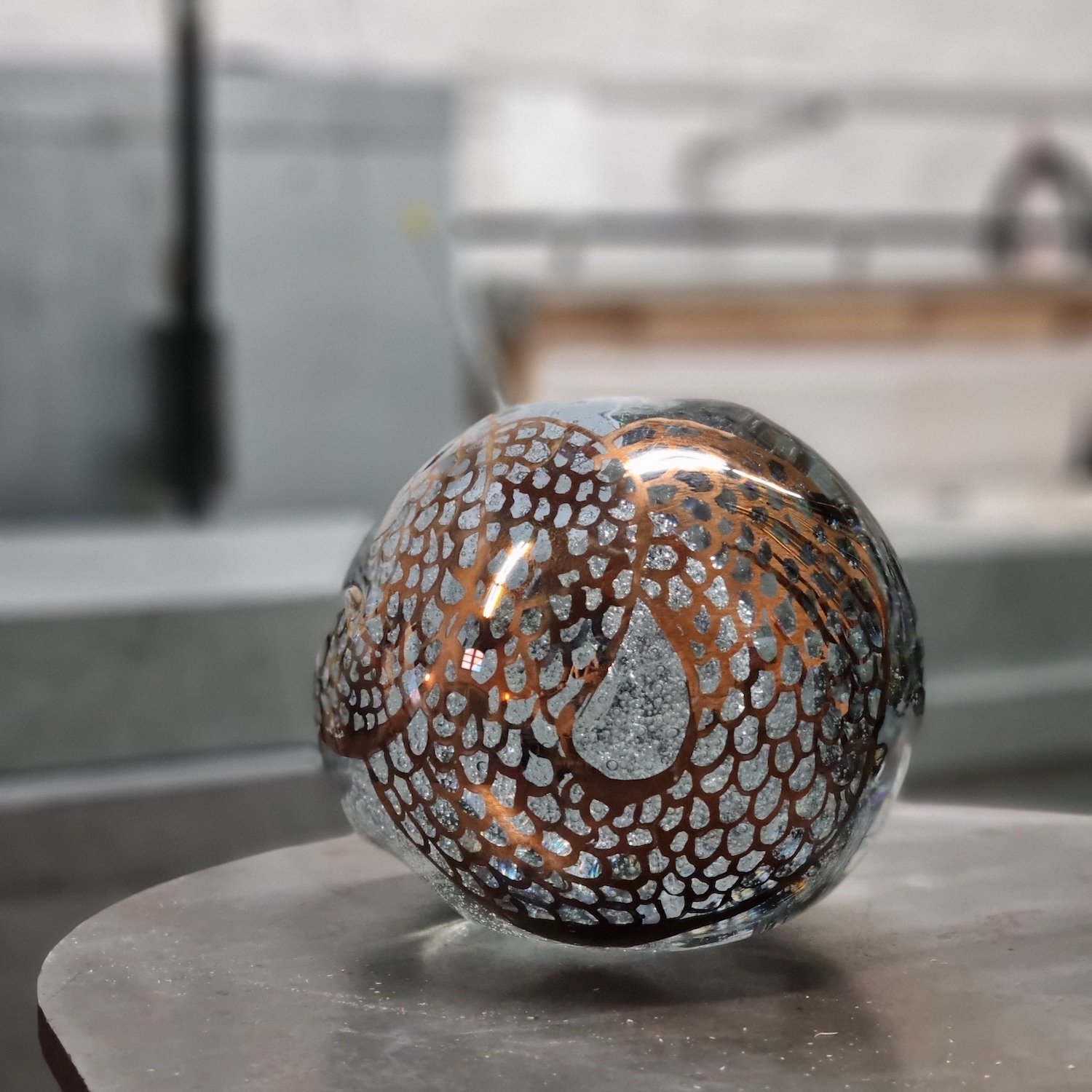
In ancient Finnish tradition, the snake is seen as a protective creature. I have painted the snake freely in copper on the surface of the object. The symbolism of eggs and it’s the connection to humanity interests me. Inside the glass, in the background is a large female face that bends inside the oval egg-like shape and is left behind by a swarm of bubbles shaped like the event horizon of the black hole. In the middle of the bubbles is a birch leaf, which repeats itself in the room-like space, like wallpaper. The old bench wobbles and distorts under the surface of the glass. Visible in the sculpture is a grimacing skeleton. It describes how understanding the value of humanity also involves the beauty of limitations.
I have made a unique solid glass sculpture in Suomenlinna. The work uses a multi-layered graal technique, soda, painting and sandblasting. The work stands independently and is signed on the bottom.
Family portrait
Find the series from Sini Majuri’s studio in Helsinki. More info via contact.
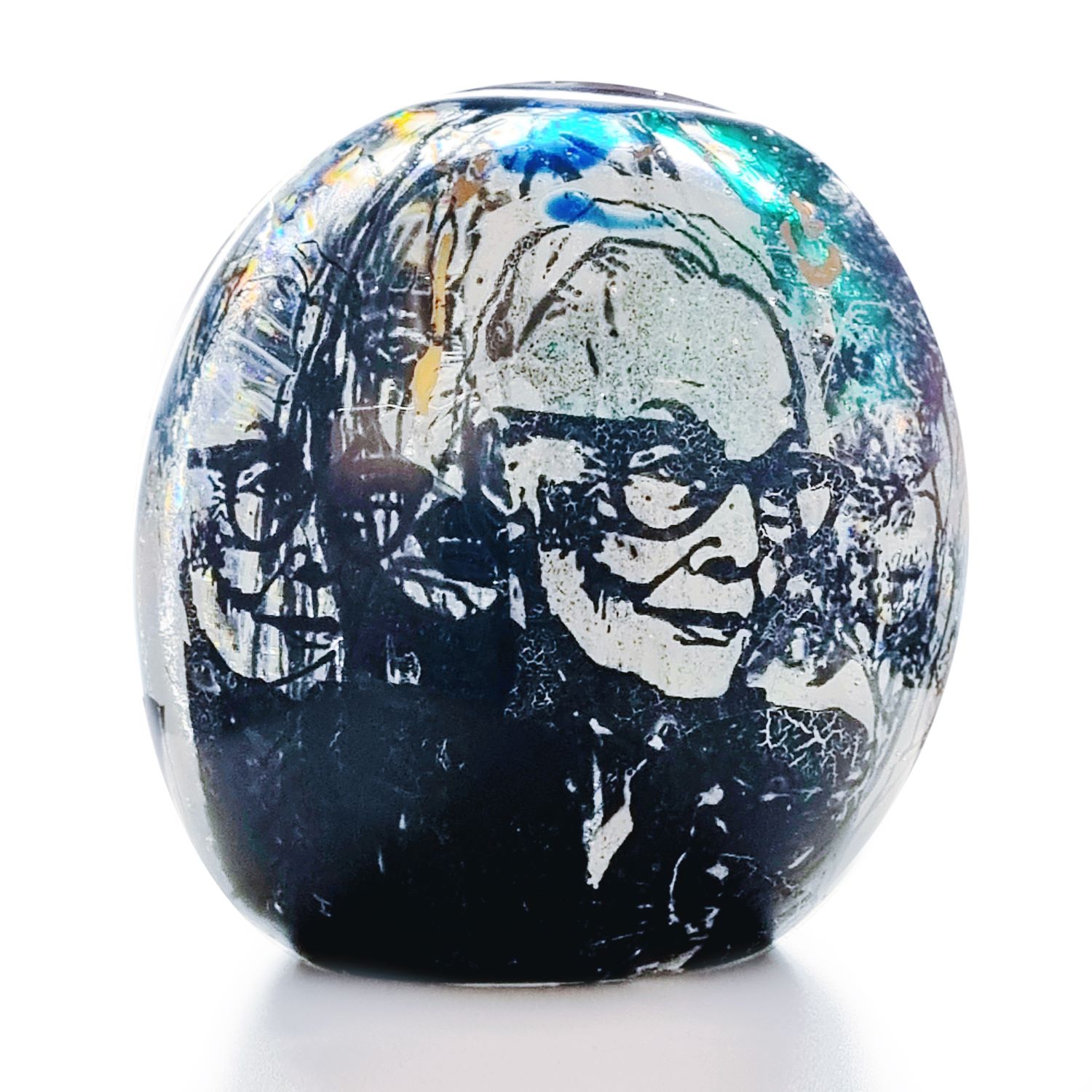
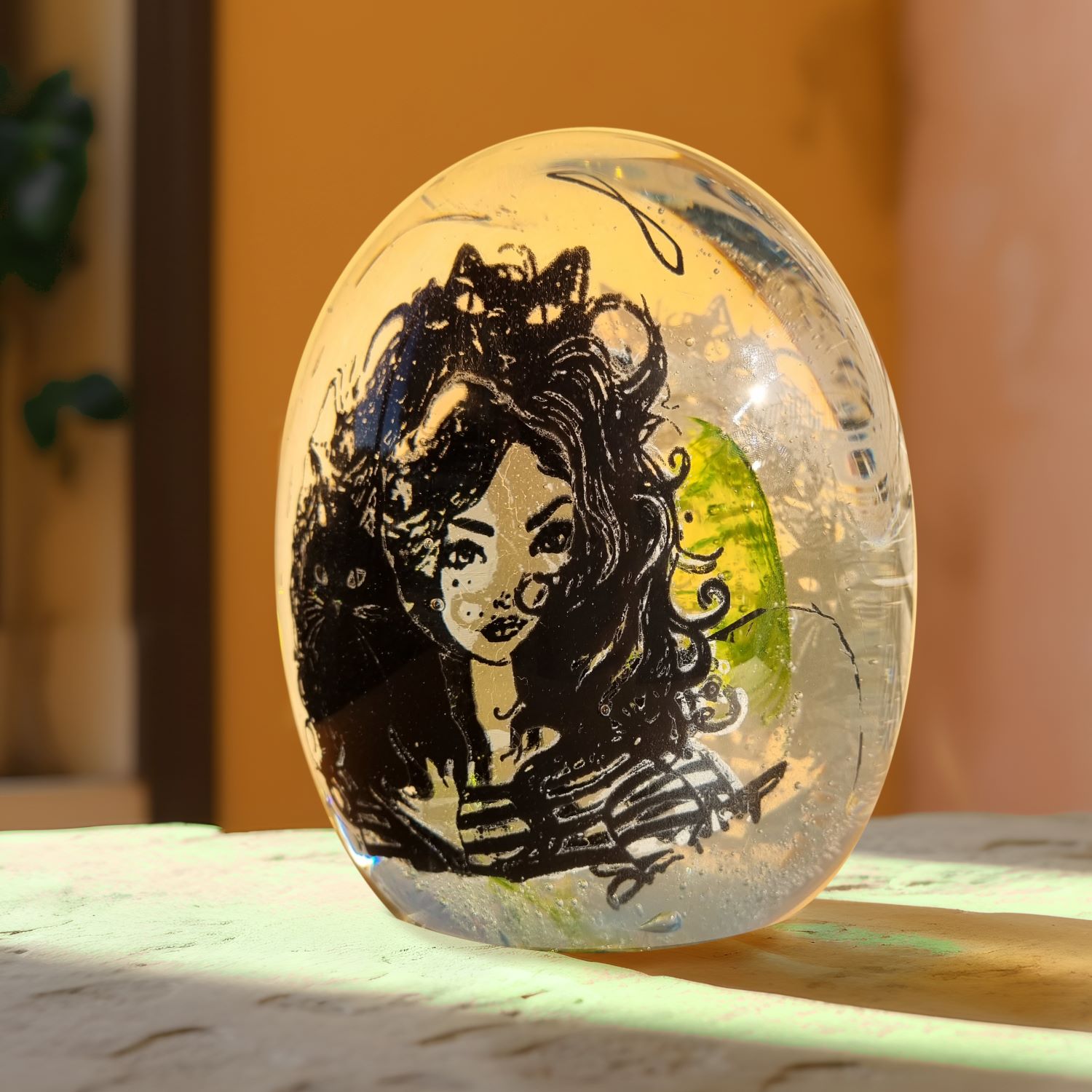
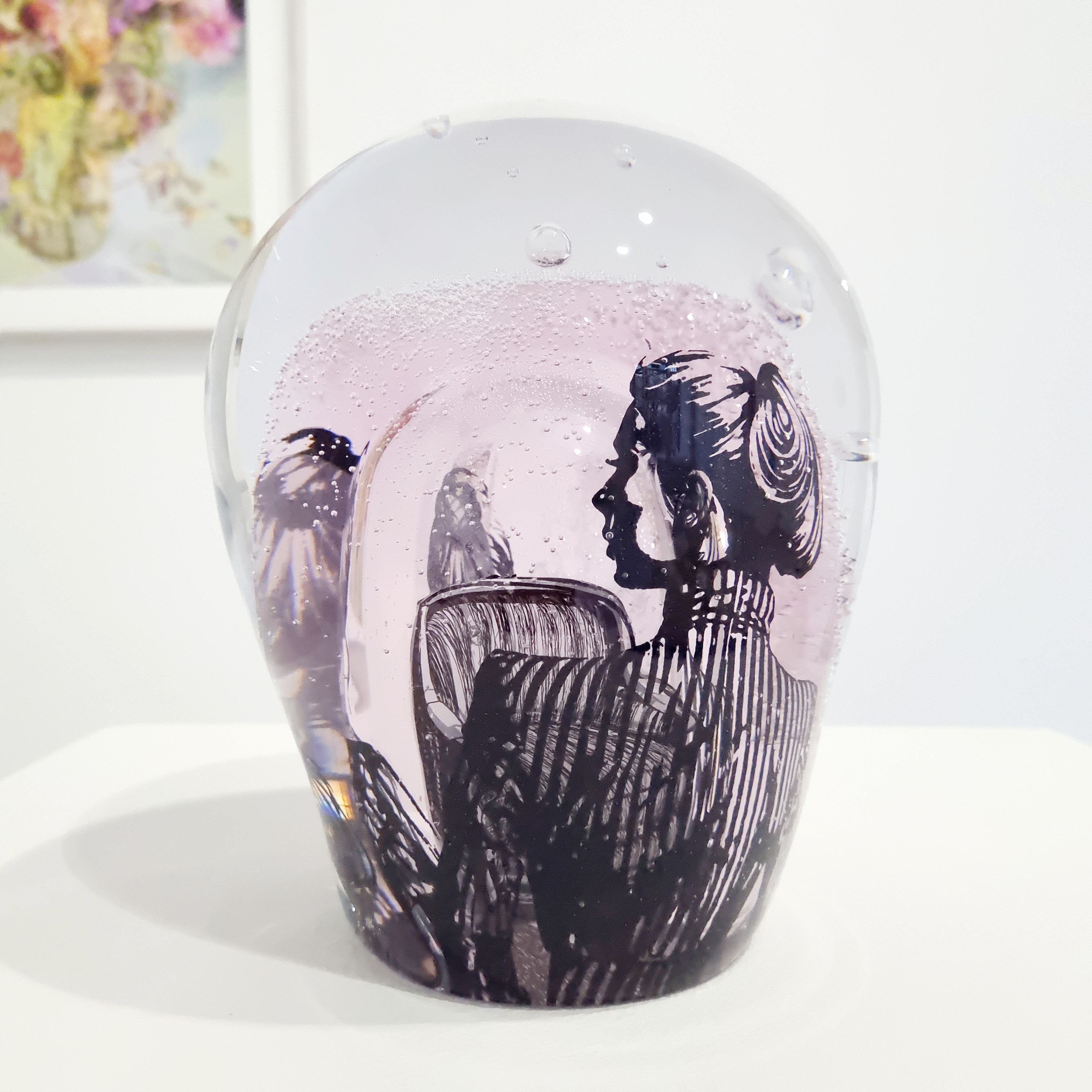
The Family portrait sculpture series about five siblings describes human as a delicate and
multidimensional entity. There is a sense of fragility in the illustrations, which reflects the subtle
tones that the human mind is composed from. Faces of the series are distorted by stretching
the glass in the process, death is lurking behind the herringbone parquets and hidden texts are
tied to the shadows. Woman is a recurring theme in Majuri’s work: How she has been portrayed
in culture and how she is seen today. Monstrousness, androgynousness and a sense of
nightmare are moods that balance with beauty in the objects.
The object series mirrors the stigma of mental health problems and the inequality of homes
during a pandemic, when moments of encounter and seeing a person have been changing
radically. In the Melancholy object classic beauty is distorted inside a thick optical glass.
Especially when viewed from the side, woman’s eyes multiply and her face waves. The woman
is at the same time, underwater, or in an old-fashioned picture frame, inside a futuristic cell-like
mass. Majuri often uses interlocking lines that create a swaying atmosphere. Illustrations mimic
the essence of an old and worn images. As a contrast – when embedded in glass, images never
fade. They remain unchanged for millennia.

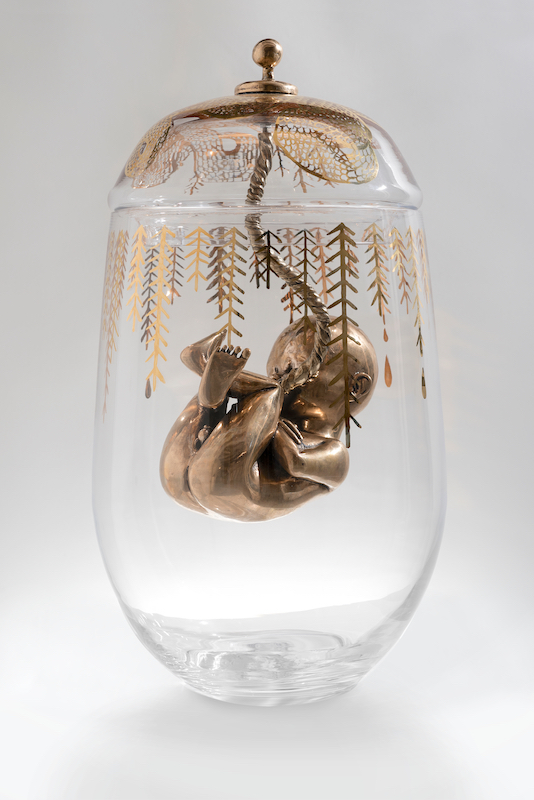
Find Noa Milo from Berengo Studio collection in Murano. Paradox – Noa Milo is a part of the Infinity Vessel project. The sculpture is reflecting lovelessess in society, what happens to an individual when humanity and emotions are disconnected from the surrounding community.
Fragile glass vessel is a metaphor of humanity, how we all are paradoxically broken and whole at the same time. Vessel can be seen as a womb, a lost paradise that we can never return to. It is a surface between an individual and the society. Fetus is the potential and hope sheltered by the insubstantial skin. Glass and bronze sculpture are in balance. Noa Milo has ornaments from Finnish and Ukrainian tradition. Golden hand painted pine needle is a symbol of bravery as the serpent is a protecting element.
A delicate glass vessel, reminiscent of a womb becomes a vessel for both the viewer’s introspection and the essence of the artwork itself. Within this ethereal cocoon lies a bronze fetus, an embodiment of potential and hope, sheltered by the insubstantial skin of glass. The duality of Noa Milo extends further, serving as a mirror to the complex relationship between individuals and society. The glass surface, both transparent and fragile, symbolizes the boundary separating an individual’s inner world from the collective whole. In this sculpture, the viewer may find solace in pondering the intersection of their own existence with the broader social fabric.
Noa Milo’s glass and bronze components find perfect equilibrium, a dance between fragility and resilience. Ornate patterns, influenced by Finnish and Ukrainian traditions, adorn the piece, hinting at the rich tapestry of cultural influences that shape our identities. Noa Milo has hand-painted golden pine needles, evoking the symbolism of bravery and resilience in the face of life’s challenges. Serpents, often seen as protective elements in Finnish tradition, coil gracefully around the vessel, standing guard over the fragile vessel within. The vessel explore the depths of our humanity, to contemplate the ever-present tension between vulnerability and strength, fragility and resilience. With each glance, the sculpture reveals new layers of meaning, inviting us to embrace the beauty found in our paradoxical existence.
Production team:
Sini Majuri
Marja Hepo-aho
Kari Alakoski
Arto Hyyryläinen
 Contemporary Glass Art
You must be logged in to post a comment.