Cinderella 2.0 at New York Fashion Week
At New York Fashion Week, during the Flying Solo show, the audience suddenly fell silent, holding their breath. Ballet dancer Mira Ollila walked in an otherworldly slow motion above everyone with glass horns on her head and 35 cm high glass heels on her feet. Cinderella 2.0 had arrived on the catwalk!
The Infinity Vessel catwalk show was very personal to designers Sini Majuri and Marja Hepo-aho. The collection mirrored the archetypes of femininity and engaged a discussion about how women are perceived in society. The archetypes – Madonna, whore, victim, forbidden woman, mother, old woman, evil, and matriarch – each represent both the societal woman and shared experience and relationship with femininity. Particularly, women’s rights and the right to their own bodies are at the forefront of the work as glass embodies humanity in the artworks.


December 2023, glass was officially recognized and added to UNESCO‘s Intangible Cultural Heritage list, a testament to its global significance and the dedication to preserving its legacy. The Infinity Vessel initiative is building on this momentum by taking concrete actions to bring Finnish glass into new arenas where it traditionally might not be found – aiming to innovate and expand the cultural footprint of this craft by influencing contemporary culture and art.
NYFW is one of the world’s most prestigious fashion events. The challenges in the fashion industry relate to questions of how we value people and how these values are reflected in society, as well as ecological and ethical challenges in the industry. Clothing manufacturing and consumption practices impact the environment and human health, and the sexualization and objectification of the female body influence how women are treated and perceived in society. In the New York Fashion Week presentation, Infinity Vessel takes a profound look at fashion and clothing as phenomena deeply connected to humanity.
The archetype of the matriarch found its form only in the final moments, while we were in New York. The glass armor revealed the model’s bare chest. A large snake, laser-engraved and AI-illustrated onto Spinnova’s innovative fiber, symbolized rebirth, the woman of the future. How will a woman’s essence change in the future, and what role does tradition and technology play?
Just before the show, the mother archetype emerged, representing discussions on women’s reproductive rights. The glass womb, wrapped in gold, symbolized both protection and burden—a reflection of societal pressures. Yet, the unbreakable golden knots hinted at resilience. This archetype was also featured in ELLE Magazine.


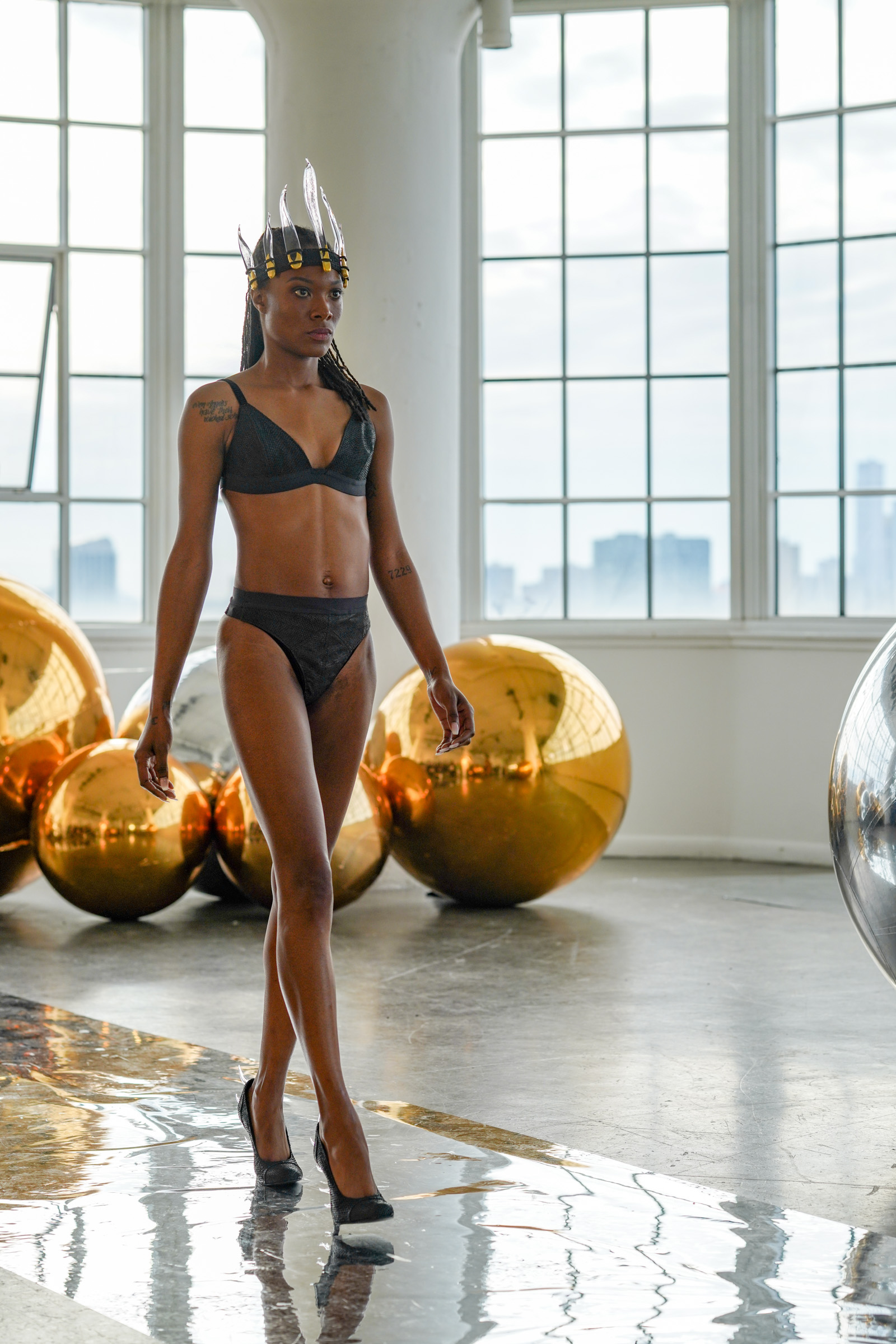

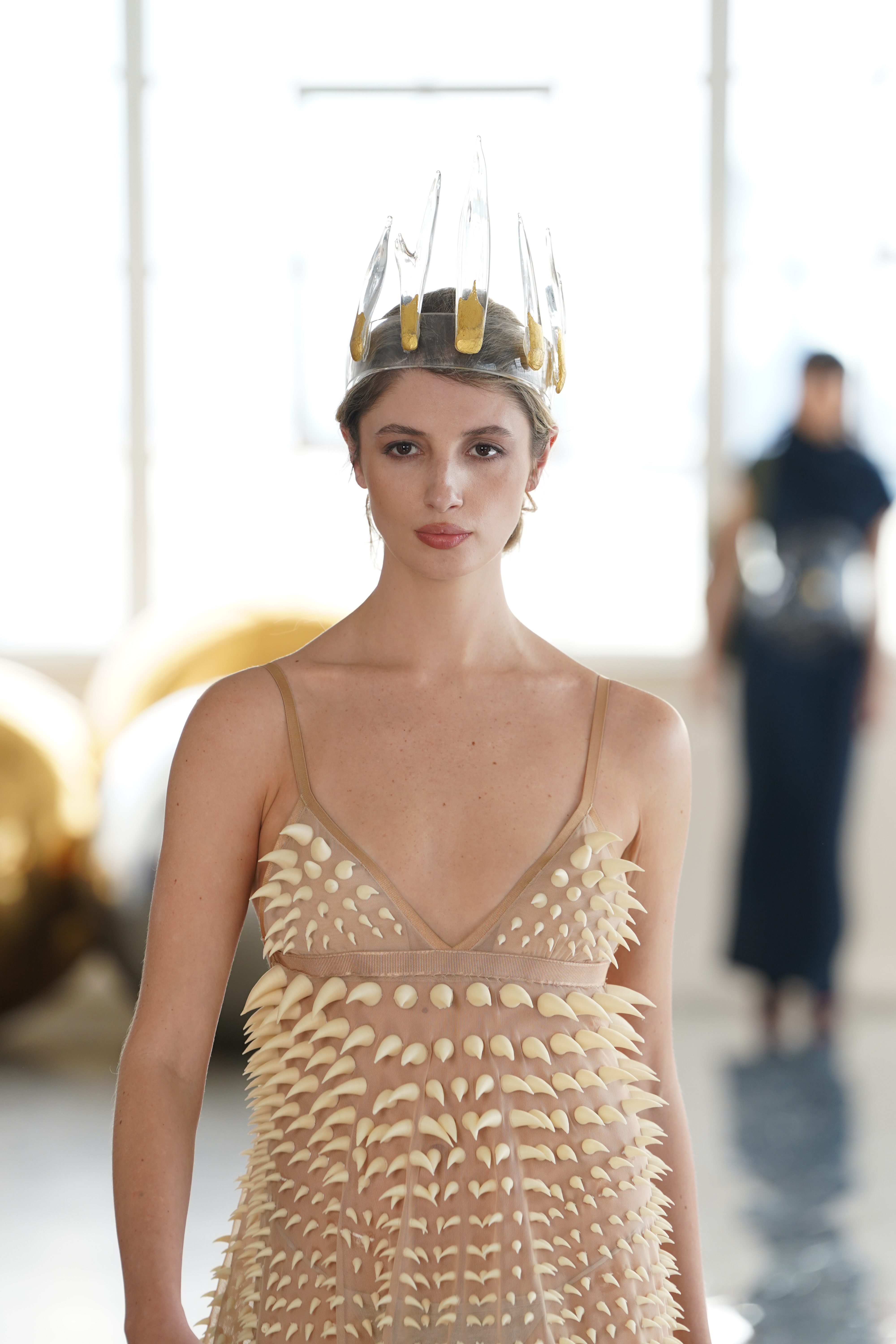
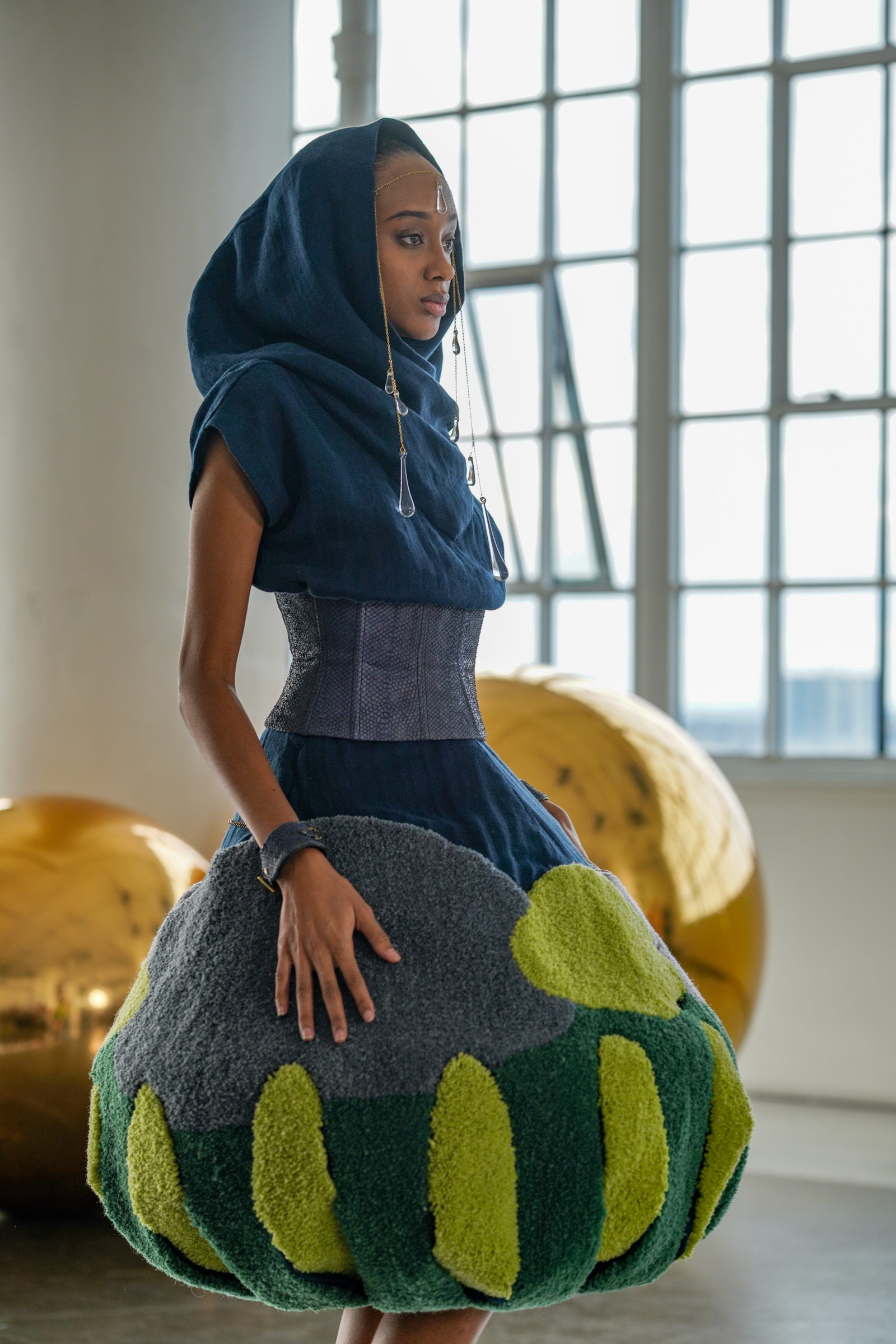
The team wore glass crowns at every event, even at the parties, attracting a lot of attention. Each glass crown is custom-made, with the human head 3D-scanned to create the mold. In the artworks, origin is important, even within the framework of fashion. Where do our clothes really come from, and who made them: Aino Simola shaped and created the costume pieces designed by Sini Majuri and Marja Hepo-aho at her studio in Riihimäki. Alexandra Holmes was in charge of printing the UPM-developed 3D-printed wood onto the garments. Inweb Oy manufactured the printing material in Finland. Tytti Porvari handcrafted the shoes using fish leather, Joonas Salo tufted the tufting-works in Helsinki.
We examined what kind of artwork a fashion show can be, and Mira Ollila brought a lot of depth to it with her physical expression. We wanted her in the piece because she has played a significant role in every Infinity Vessel work. In the first piece presented in Venice, she appeared in holographic art and augmented reality as a zombie. In the RoboBallet presented in Finland, she danced the dance of death with a Boston Dynamics robot. In New York, she walked in glass heels, adding a significant element of danger to her walk. No one else could have walked in them.
Photographers: Ilya S Savenok, Getty Images. Barbara Raw. Victor Pagan Photography. Tony Thanawat

 Contemporary Glass Art
You must be logged in to post a comment.