Cinderella 2.0 at New York Fashion Week

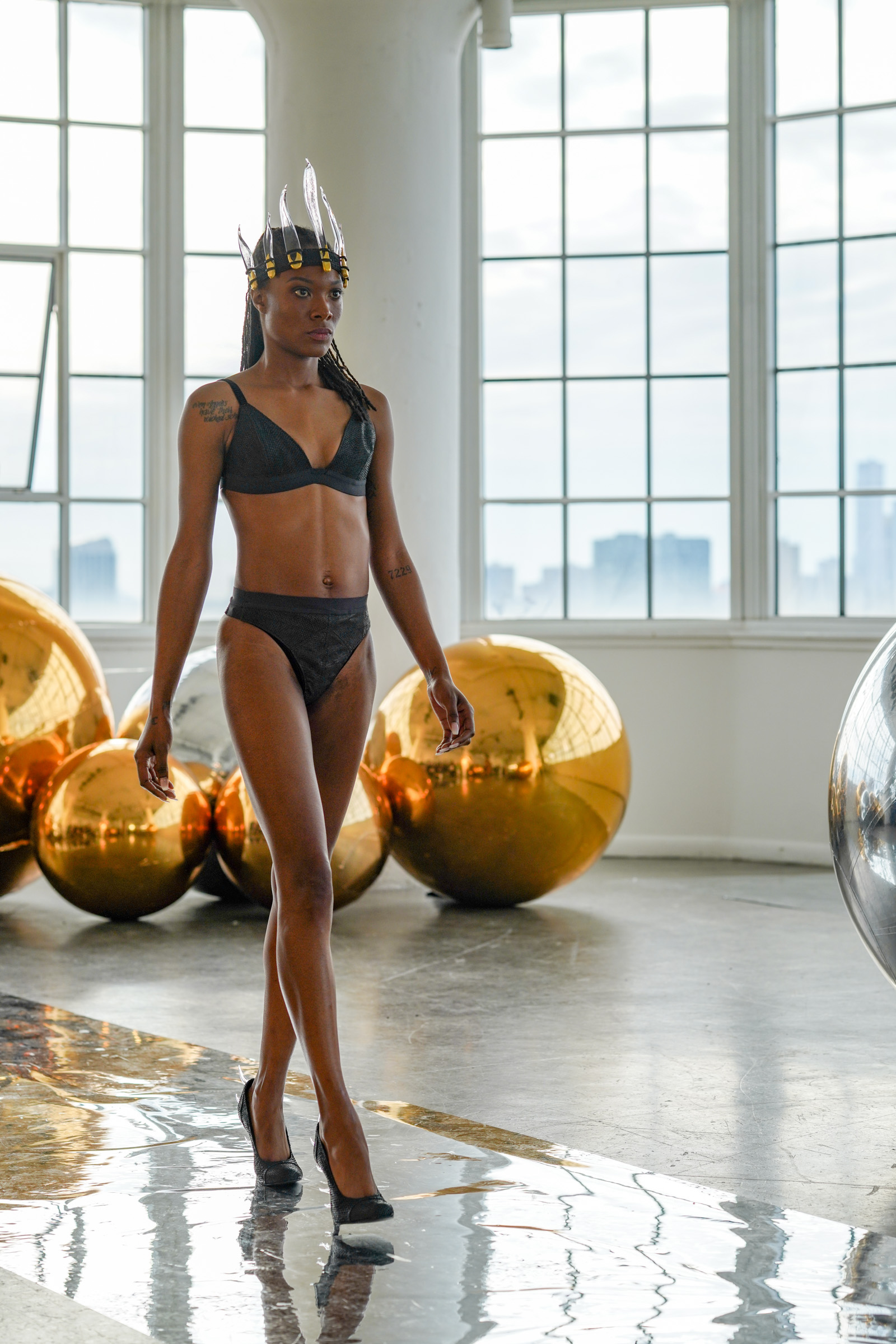
At New York Fashion Week, during the Flying Solo show, the audience suddenly fell silent, holding their breath. Ballet dancer Mira Ollila walked in an otherworldly slow motion above everyone with glass horns on her head and 35 cm high glass heels on her feet. Cinderella 2.0 had arrived on the catwalk!

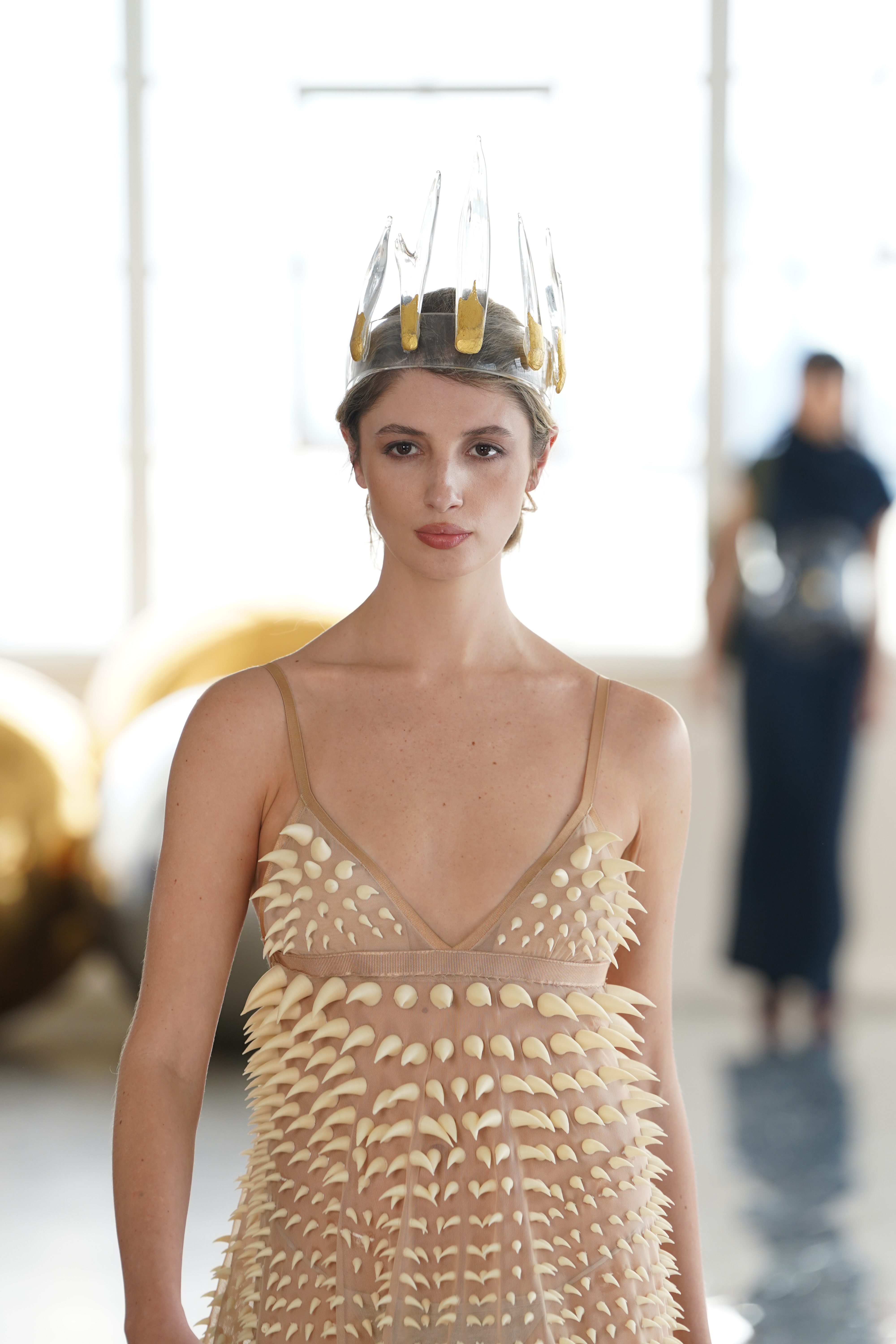
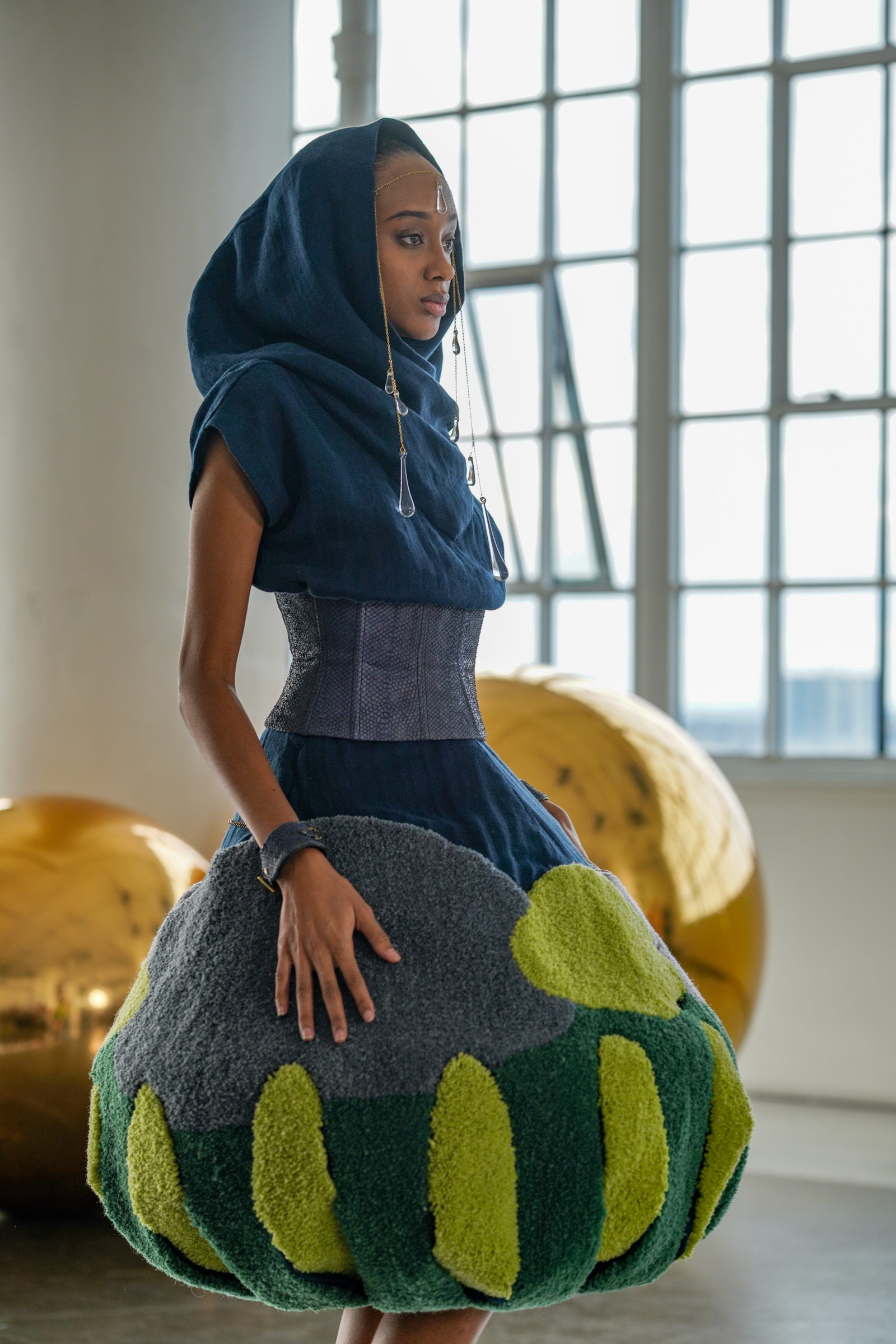
The Infinity Vessel catwalk show was very personal to designers Sini Majuri and Marja Hepo-aho. The collection mirrored the archetypes of femininity and engaged a discussion about how women are perceived in society. The archetypes – Madonna, whore, victim, forbidden woman, mother, old woman, evil, and matriarch – each represent both the societal woman and shared experience and relationship with femininity. Particularly, women’s rights and the right to their own bodies are at the forefront of the work as glass embodies humanity in the artworks.

New York Fashion Week, Flying Solo Show, Canoa Studios, glass shoes, glass heels, cinderella shoes, glass art, sculptural shoes
35 cm tall glass shoes are made in Finland. The materials are 3D printed wood, blown glass and fish leather. Photo Barbara Raw.
New York Fashion Week, Flying Solo Show, Canoa Studios, glass shoes, glass heels, cinderella shoes, glass art, sculptural shoes
Ballet dancer Mira Ollila’s feminine archetype was that of the forbidden woman. Veiled in a silky shroud, she moved as if floating in the air, yet the glass shoes weighed heavy. Walking in them demanded exceptional skill. Photo Barbara Raw

December 2023, glass was officially recognized and added to UNESCO‘s Intangible Cultural Heritage list, a testament to its global significance and the dedication to preserving its legacy. The Infinity Vessel initiative is building on this momentum by taking concrete actions to bring Finnish glass into new arenas where it traditionally might not be found – aiming to innovate and expand the cultural footprint of this craft by influencing contemporary culture and art.

NYFW is one of the world’s most prestigious fashion events. The challenges in the fashion industry relate to questions of how we value people and how these values are reflected in society, as well as ecological and ethical challenges in the industry. Clothing manufacturing and consumption practices impact the environment and human health, and the sexualization and objectification of the female body influence how women are treated and perceived in society. In the New York Fashion Week presentation, Infinity Vessel takes a profound look at fashion and clothing as phenomena deeply connected to humanity.

The archetype of the matriarch found its form only in the final moments, while we were in New York. The glass armor revealed the model’s bare chest. A large snake, laser-engraved and AI-illustrated onto Spinnova’s innovative fiber, symbolized rebirth, the woman of the future. How will a woman’s essence change in the future, and what role does tradition and technology play?

Just before the show, the mother archetype emerged, representing discussions on women’s reproductive rights. The glass womb, wrapped in gold, symbolized both protection and burden—a reflection of societal pressures. Yet, the unbreakable golden knots hinted at resilience. This archetype was also featured in ELLE Magazine.

Infinity Vessel collection at Flying Solo fashion Show at Canoe Studios during New York Fashion Week 2024. Models Carl Nowak, Courtney McCoy, Gayeon Jang, Lara Jalloh, Ni Simone, Vivian Sun, Sydney Schnee and Mira Ollila

The team wore glass crowns at every event, even at the parties, attracting a lot of attention. Each glass crown is custom-made, with the human head 3D-scanned to create the mold. In the artworks, origin is important, even within the framework of fashion. Where do our clothes really come from, and who made them: Aino Simola shaped and created the costume pieces designed by Sini Majuri and Marja Hepo-aho at her studio in Riihimäki. Alexandra Holmes was in charge of printing the UPM-developed 3D-printed wood onto the garments. Inweb Oy manufactured the printing material in Finland. Tytti Porvari handcrafted the shoes using fish leather, Joonas Salo tufted the tufting-works in Helsinki.

We examined what kind of artwork a fashion show can be, and Mira Ollila brought a lot of depth to it with her physical expression. We wanted her in the piece because she has played a significant role in every Infinity Vessel work. In the first piece presented in Venice, she appeared in holographic art and augmented reality as a zombie. In the RoboBallet presented in Finland, she danced the dance of death with a Boston Dynamics robot. In New York, she walked in glass heels, adding a significant element of danger to her walk. No one else could have walked in them.

Photographers: Ilya S Savenok, Getty Images. Barbara Raw. Victor Pagan Photography. Tony Thanawat
The Pulse of Family Business: Designing The Family Enterprise Award

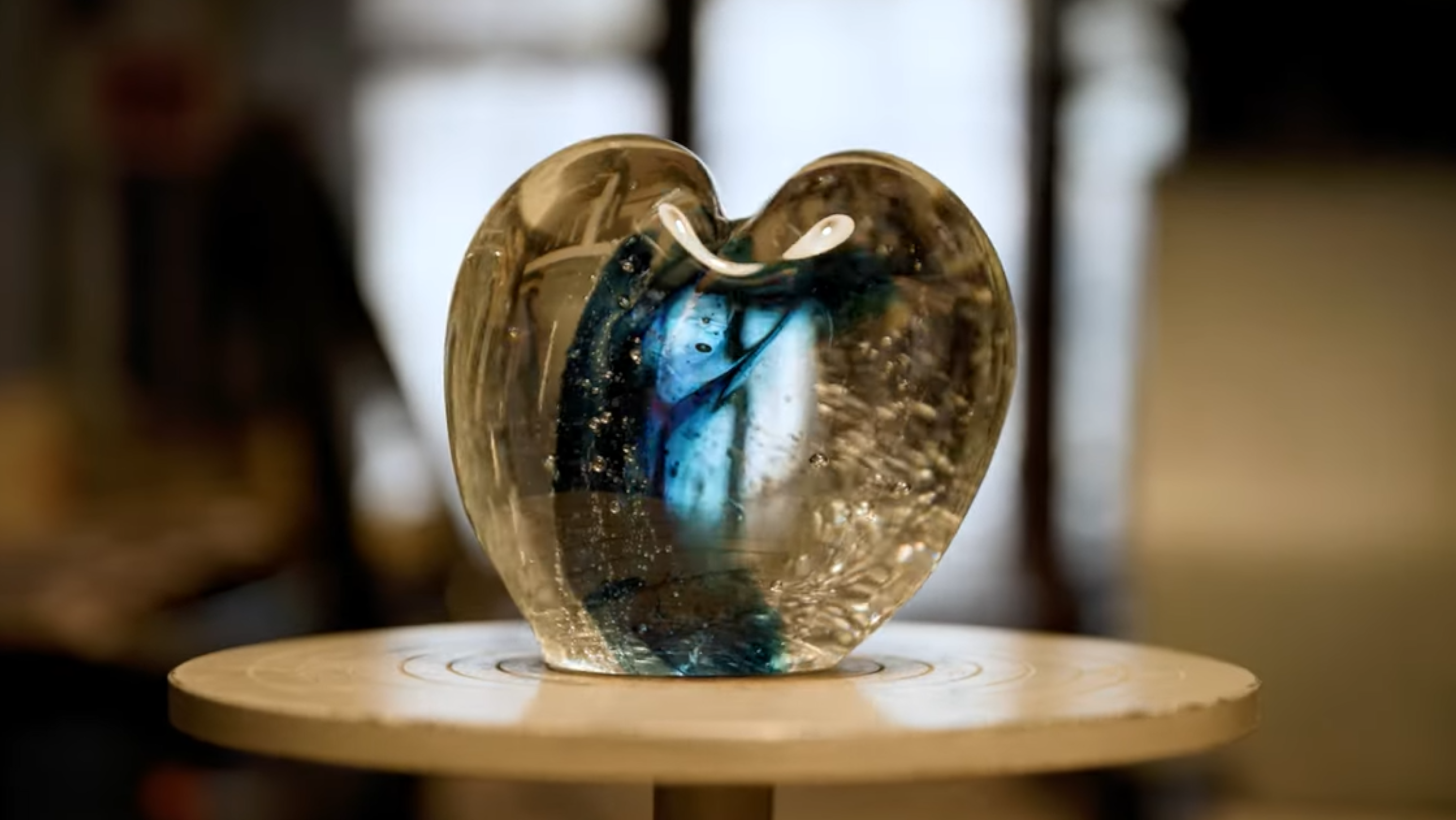
In the video made by OneMinStory, glass artist Sini Majuri reveals the symbolism and inspiration behind the award piece as she shapes it in the historic surroundings of Suomenlinna.

It was a great experience to design an award for the Finnish Family Business Association. The choice of using mouth-blown glass as the material for the award resonates with the heartbeat of family entrepreneurship. Glass, a globally rare art form with a nomination pending for UNESCO’s Intangible Cultural Heritage list, echoes the delicate balance of strength and fragility. It’s a dance of temperature and timing, much like the steady pulse that sustains a living being. In each glassblower’s breath, there’s a rhythm that shapes the material, paralleling the heartbeat of family-run businesses that throb with passion and dedication. Each generation brings its unique breath to the process, infusing the business with fresh ideas while maintaining the warmth of tradition.

sydän palkinto palkintoesineen suunnittelu, palkinnon suunnittelu, mittatilauspalkinto helsinki, lasipalkinto, mitalli, pokaali, mittatilauspokaali
Hearth is not just an organ that sustains life. It’s a universal emblem of love, passion and enduring strength – qualities intrinsic to the soul of family entrepreneurship – lifeblood of commitment and the pulse of generations working harmoniously.

Since the establishment of the award in 2004, and its renaming in 2012 as the Peter Fazer Award, the award celebrates the symbiotic relationship between tradition and innovation. This year’s recipient, MSK Group Oy, stands as a testament to this idea. As a multifaceted high-tech family enterprise, they exemplify the heart’s resilience – pulsating with a blend of heritage and modernity, echoing the continuous rhythm of progress.

lasitaiteilija, palkintoteos, mittatilauspalkinto, design palkinto, tilauspokaali, pokaali, mitalli, palkinto, lasi, contemporary glass, nykytaide, scandinavian design, helsinki, suomenlinna
Blowing the Glass Award for Family Businesses in the Historic Suomenlinna Glass studio Hytti.

The creation of the glass heart, a process rich in tradition and precision, was a narrative beautifully captured by Antti Sipilä and Samppa Fjäder from OneMinStory‘s team. Their documentation brought to light to the artistry of glassmaking. It’s interesting how the development of lenses, a milestone in human history, was predicated on the mastery of glass, illustrating the profound influence this material has had on our perspective of the World. Similarly, family businesses embody a cornerstone technology within the social fabric.

In every family business, like in the breath-controlled art of mouth-blown glass, there’s a steady, rhythmic beat of adaptability. This glass heart reflects the enduring spirit of these enterprises. It’s not just a symbol of recognition; it’s a metaphorical echo of the heartbeat that drives family businesses. In the core of every endeavor, there lies a pulse, a steady throb of identity and passion, pulsating towards a future that reveres its past while boldly embracing the new.

The video of the process is by OneMinStory.

Psst.. Join our journey of art and innovation! Subscribe to our newsletter for exclusive insights into the mesmerizing world of glass art:

Go back

Your message has been sent

Warning

Exhibition in G12, Helsinki

lasitaide lasiveistos nykytaide
Snake-shaped chandeliers that weep tears, symbolize the complexities and struggles of domestic life. Snake is a symbol of rebirth and transformation, and a metaphor for the primal, animalistic urges that lie dormant within us. In many cultures, snakes are seen as both symbols of healing and destruction.

Homes are more than mere structures that we inhabit. For they serve as reflections of our innermost thoughts, emotions, and concealed identities. Sini Majuri’s latest sculpture series delves into the non-physical dimensions of our existence.

Sini Majuri’s glass exhibition is open in G12 Gallery in Helsinki from April 22 till May 11, 2023. Pieces blend the tangible and intangible, the old and new, and the handmade and digital. By blurring the lines between art and science, Majuri hopes to capture the ever-evolving nature of art and the human experience – and challenge viewers to consider is it possible that technology could unlock new depths of creativity – Or will it ultimately lead to a loss of authenticity and soul?

The glass sculptures portray layers of feminine countenances of the human psyche. By toying with ugliness and beauty, these works invite to think about the intricate nature of human perception and the multifaceted dimensions of aesthetics. Similarly, the image of a woman with layered faces represent the different roles that women play in society, as well as the complex nature of femininity itself.


Majuri’s work portrays homes as both a sanctuary of comfort and a site of trauma, using symbols like the weeping serpent and layered women to represent the nature of our subconscious. Glass, with its transparency and fragility is a metaphor for the human mind, which is complex and multifaceted. We may curate our homes to reflect a certain image or ideal, but behind closed doors, there may be hidden struggles and complexities that we keep hidden away from view. Antimatter series is showcasing both the light and the dark aspects of domestic life. While Finland ranks as the happiest country in the world, domestic violence remains a significant problem. The transparency of glass reminds us that what we see on the surface may not always be the full story.

lasinpuhallus lasitaide nykytaide veistos
Antimatter series mirror the theme of Homes, how they are the vessels of our being, the repositories of our memories, for they are more than mere structures that we inhabit. Sculptures also offer a reminder that healing and growth are possible, even in the face of trauma and adversity

Glass as a medium highlights the idea of transparency and the power of seeing through barriers. In the same way that glass reveals what lies beneath its surface – sculptures invite viewers to explore the hidden layers of our own consciousness and the stories that we often keep concealed. Transparency underscores the importance of vulnerability and honesty in our relationships, both with ourselves and with others. Glass is a material that is both fragile and strong, transparent and reflective. These qualities are a metaphor for the contradictions and paradoxes that we encounter in our lives.

Sini Majuri’s Artist Meet 4.5 at 12.00 in G12 Gallery, Annankatu 16.

Listen Sini Majuri’s interview in Radio Helsinki from here.

Images by Juha-Matti Vahdersalo